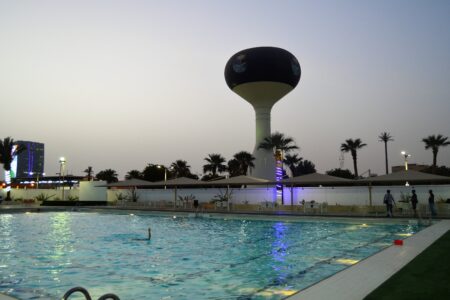
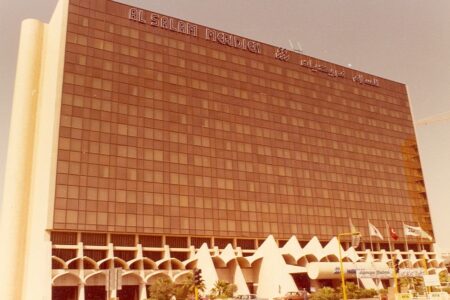
Saudia Airlines Saudia Airlines started its journey in 1945, and the first plane was gifted to King Abdul Aziz. The plane DC-3 was gifted by the 32nd US President Franklin Roosevelt to King Abdul Aziz in 1945. The President was returning from the Yalta Conference and on his way back met with regional leaders of the Middle East. The journey of Saudia began in 1946, initially set up as “an operating agency of the Ministry of Defense”. Saudia’s first airport was at Kandhara. The founding of SAUDI was announced in September 1946 and its emblem was adopted. The emblem (logo) showed its affiliation with the Ministry of Defense. The first flight of Saudi Arabian Airlines (SDI) began on October 28th, 1946 took off to Lad airport, Palestine to pick up pilgrims from the Lebanese capital Beirut. It was a matter of astonishment as where journey took about 60 days and was shortened to several hours. Saudi Arabian Airlines became an independent company in 1963 after papers were signed by King Faisal bin Abdul Aziz. After nearly a decade Saudi Arabian Airlines was renamed to Saudia. (1972). I always used to wonder as a kid why the two names. To many from Middle Eastern and Asian companies, Saudia is not just an airline but an emotional bond that exists. I was surprised to see the same statement from the Director General of Saudia. “The name and logo of Saudia are integral parts of the Kingdom’s aviation history and development, and our people share a special emotional connection with the brand. We have incorporated this rich heritage into our new identity, adding elements that reflect our visionary approach, poised to captivate the world.” -Ibrahim Omar, Director General, Saudia. The first time I came across Saudia was in the 1980s. That was one of the coolest times to be in Saudi Arabia. The King Abdul Aziz Airport opened in 1981 and had an attractive look at that time. I was in grade 2 after the school holidays I went to visit the ‘New Airport” with my dad. It was a feeling of happiness as I climbed up walking. The Design was captivating as well was my 1st introduction to an automated lift or escalator. After a month or so, our family would go to the Airport (KAIA) to use its services. We would travel by Saudia Airlines to meet our family in Dhaka. The excitement, and happiness that was felt could not be described in words. Whenever we thought of KAIA it was because we were leaving for our home country. School Mate in Saudia The happiness that one of school seniors was CEO of Saudia Airlines. Captian Ibrahim Koshy. This gentleman now is doing things by his own,related to investment. The attraction of Saudia was not just the Airport and airlines but also Saudia city.He has done much for Saudi Airlines . Five years senior to me in school.(Manarat Jeddah). Captain Ibrahim Koshy is a prominent figure in the global aviation industry, known for his steady leadership and decades of experience. Beginning his journey as a pilot in 1991, he accumulated over 10,000 flight hours before rising through key operational and safety roles. OLd Airport . Saudia City Saudia City was built originally for the employees of Saudi Arabia Airlines. The scenery and ambiance were totally different from those outside the compound. It has about 3000 units with 10,000-12,000 residents living there. Outsiders had to show iqamas plus know a friend in Saudia City to enter. The compound was so beautiful and we are talking about it in the 1980s. Most of the Residents were from America, the UK, and Europe with some from the Indian subcontinent and Middle East. The facilities in the compound were as follows: It was a secure life with diverse friends and women would be dressed in regular clothes without the need of a veil. Nowadays (2023) it might not appear so special but in the 1980s, the compound was spectacular in Jeddah. So many people can relate to the Saudia City compound as they grew up there. At that time there was no internet, and kids did was play extracurricular activities like playing football, basketball, and going cycling. The bond between those who lived in Saudia City was special and much stronger as opposed to others who lived outside the compound. I remember visiting in 1985 and was surprised to play football in the evening since there was floodlights. One resident (past) puts it: I lived in Saudi City from 1988-to 2005 and my father worked for Saudi Airlines for the Saudi Royal hanger as an inspection engineer and went to school at the Pakistan Embassy school aziziyah had a lot of friends most of them Pakistani and Indian yes sir those were the golden days which will never come back again and also whenever i pass by that compound tears come in my eyes and with lots of memories like and if i get an opportunity get a job in Saudi Airlines I will live in the same villa were i grew up in which NE area. -Tariq Durrani, hybidcamel.com. src __ Saudia tragedies Like other airlines tragedies did strike Saudia. The most famous being Saudia Flight 163 where the airplane landed but caught fire. They could not be evacuated. All passengers died in the accident. May Almighty have mercy on them. This happened on 19th August, 1980. A very sad incident which I am not going to discuss here as it really pains me. (A family friend’s brother died in this accident). YouTube link: A remake of the incident. Documentary link. Website link. Website 2 link. Ahlan Wasahlan magazine It was an inflight magazine and we passengers looked forward to the complimentary inflight magazine though it got boring sometimes as not very good writers wrote there. Saudia could think of writing interesting stories by good content writers. These inflight magazines are sold now in eBay. It had stories of various destinations in Saudia Arabia and other countries and was interesting to read. … Continue reading “Saudia Airlines :Saudia”
 Written by SAMEE